Product Discovery / UX Research / Social Impact
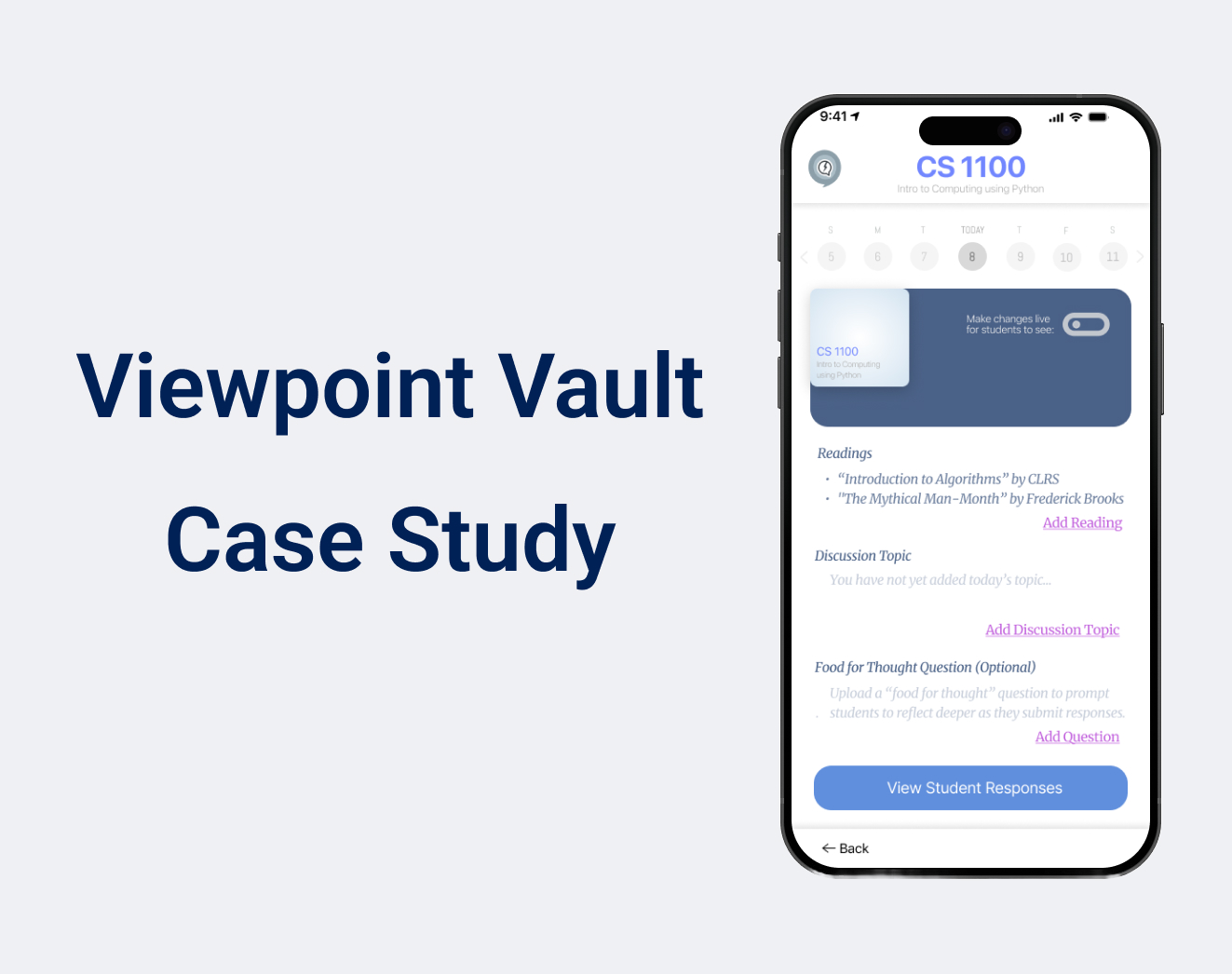
Viewpoint Vault
A two-sided classroom tool that surfaces the opinions social pressure keeps quiet.
- Project type
- Team research and design project, Cornell University
- Status
- Research-backed concept
- My role
- UX researcher and UX designer
- Team
- Troy Corbitt, Kate Dunn, Darius McCullough, Josephine Kim
- Tools
- Contextual interviews, diary studies, rapid ethnography, Figma
- Timeline
- Feb – May 2025
The result
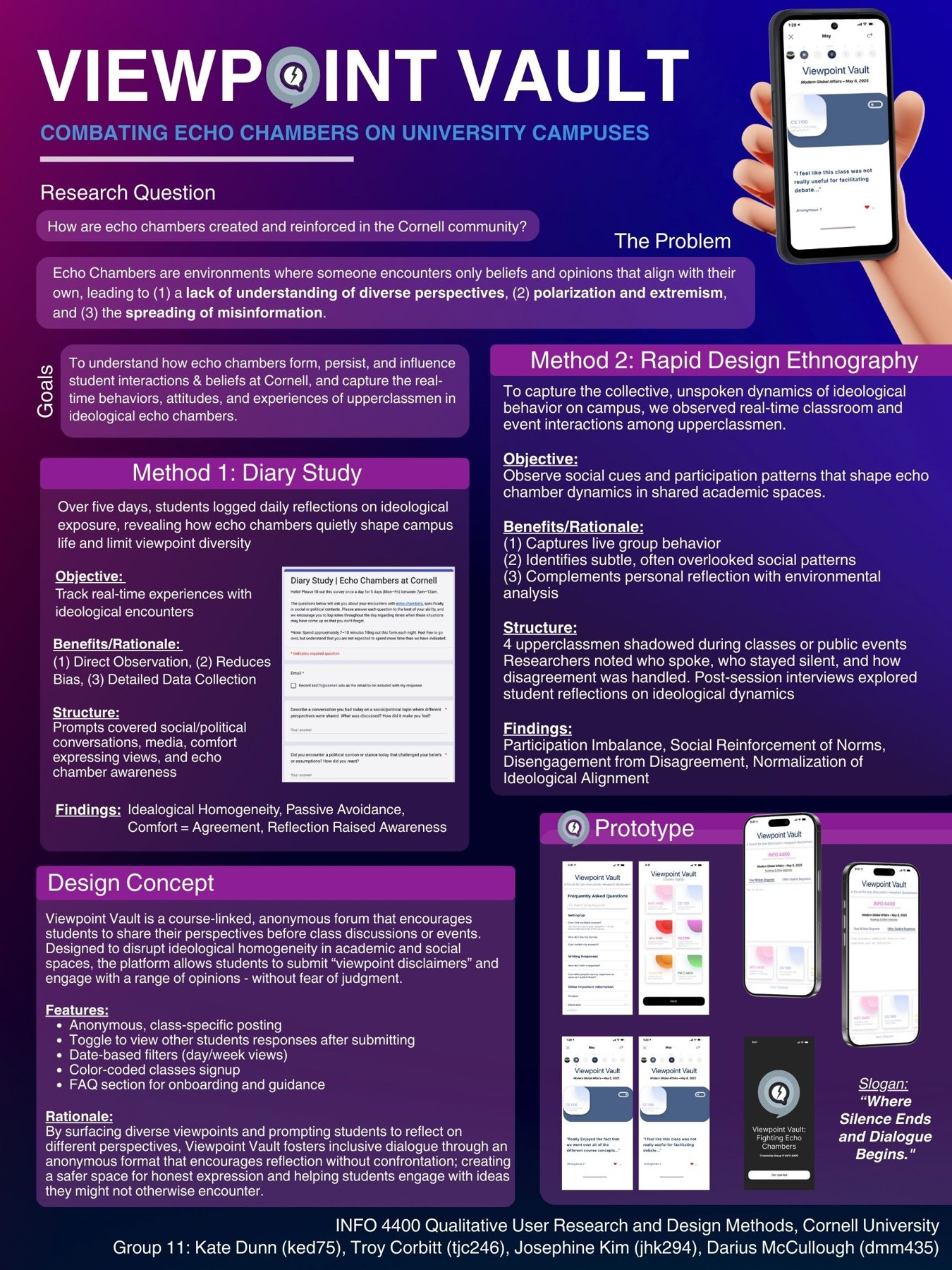
Research-backed product requirements and prototype flows for both students and instructors.
The opportunity
Silence isn't the same as agreement.
At Cornell, students often find themselves in academic and social echo chambers. Exposure to different opinions is limited, and speaking up against the dominant view can feel risky.
We wanted to understand how these echo chambers form and stick around on campus — and design something that encourages open dialogue and lowers the social cost of disagreeing in class.
Research · Diary study
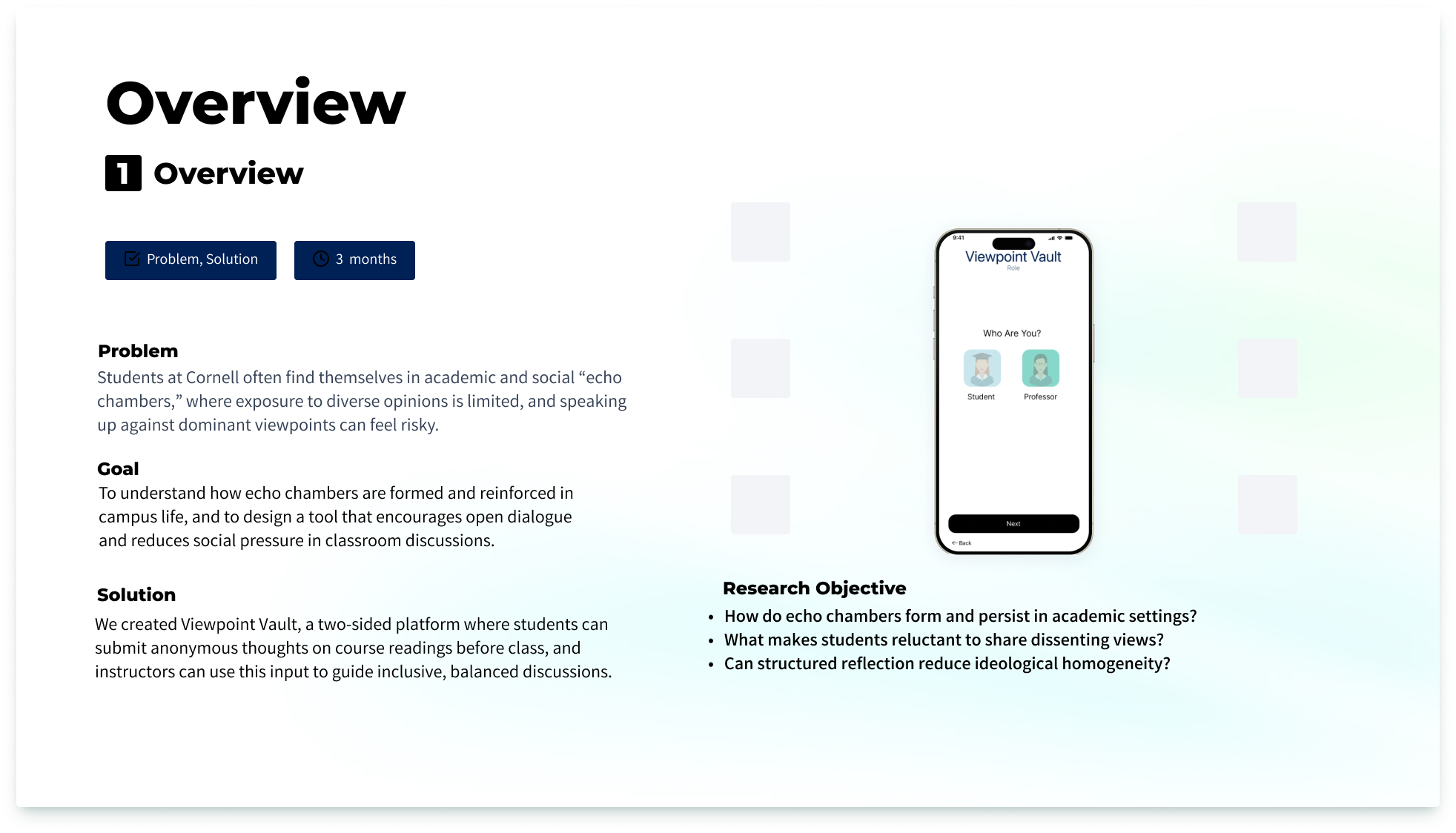
Nine students, 33 diary entries.
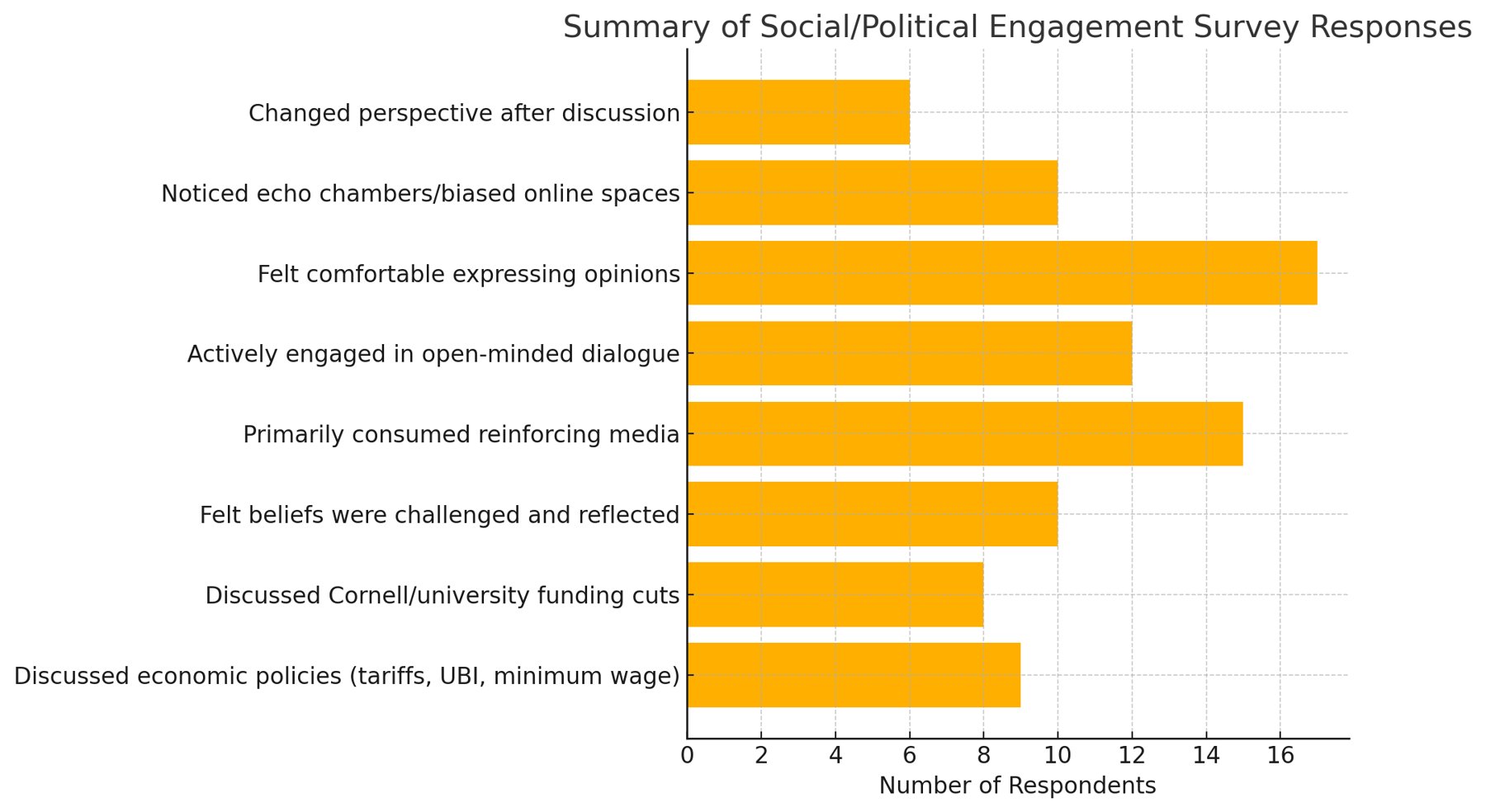
Over five days, nine upperclassmen logged their encounters with echo chambers in social and political contexts, adding up to 33 entries.
Writing it down daily made participants notice something: their media choices, group dynamics and silence in class were shaped less by intention than by habit. Awareness itself was a lever — and a small, low-effort reflection could prompt it.
Research · Rapid ethnography
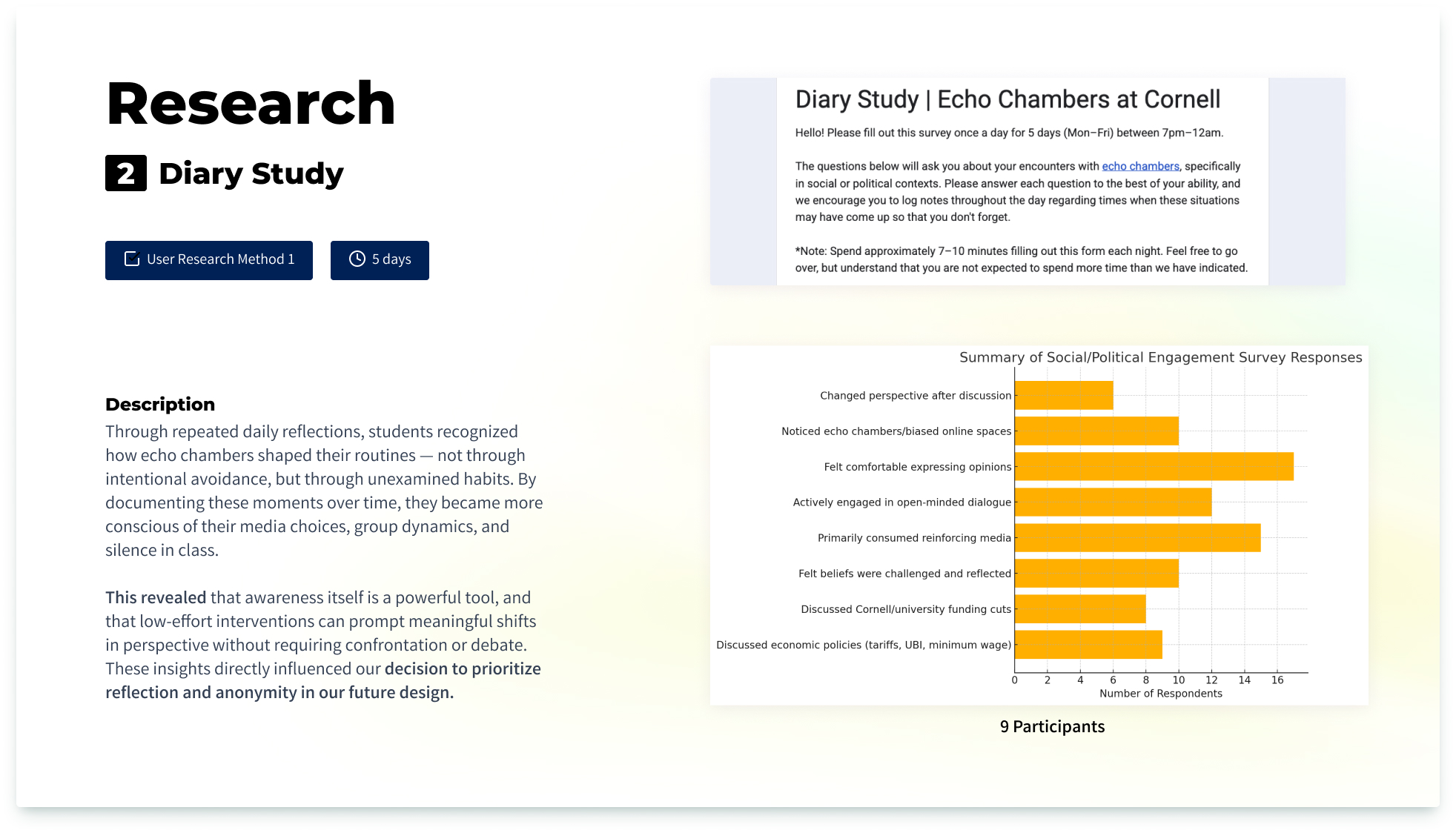
Watching who talks.
We observed live classroom discussions and followed up with interviews. A few confident voices dominated while most students stayed quiet — even when they disagreed.
That silence came from fear of judgment and perceived social risk. Room layout, peer dynamics and how discussions were run all reinforced it, which told us the intervention needed to happen before the discussion starts.
Research · Thematic analysis
Two patterns kept coming up.
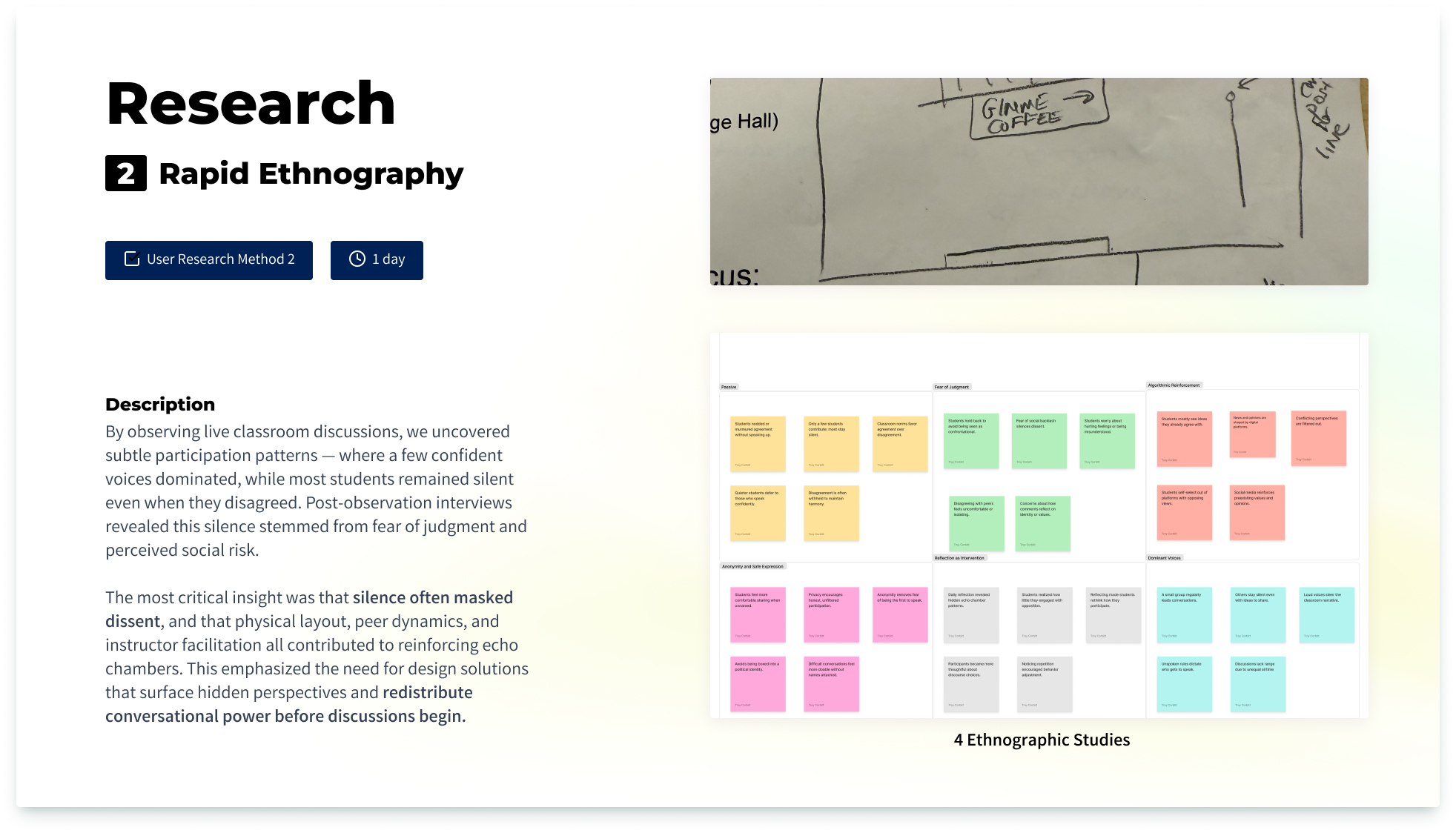
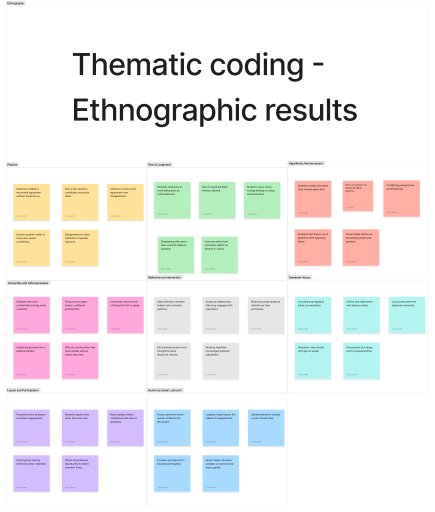
Across 10 literature sources, 9 contextual interviews (50+ minutes each), a 5-day nightly diary study and 4 classroom observation sessions, we coded what we saw and heard into themes.
Two stood out. Passive agreement: students nodding along while a few vocal classmates set the direction. Fear of social risk: avoiding conflict or judgment by staying quiet.
Insights → opportunities
What the research told us to build
Insight
Silence ≠ agreement
Students held back opinions out of fear, not apathy. Hiding identities made people far more willing to be honest.
Insight
Reflection builds awareness
Daily prompts revealed patterns students hadn't noticed — even simple reflection disrupted unconscious habits.
Opportunity
Foster anonymous expression
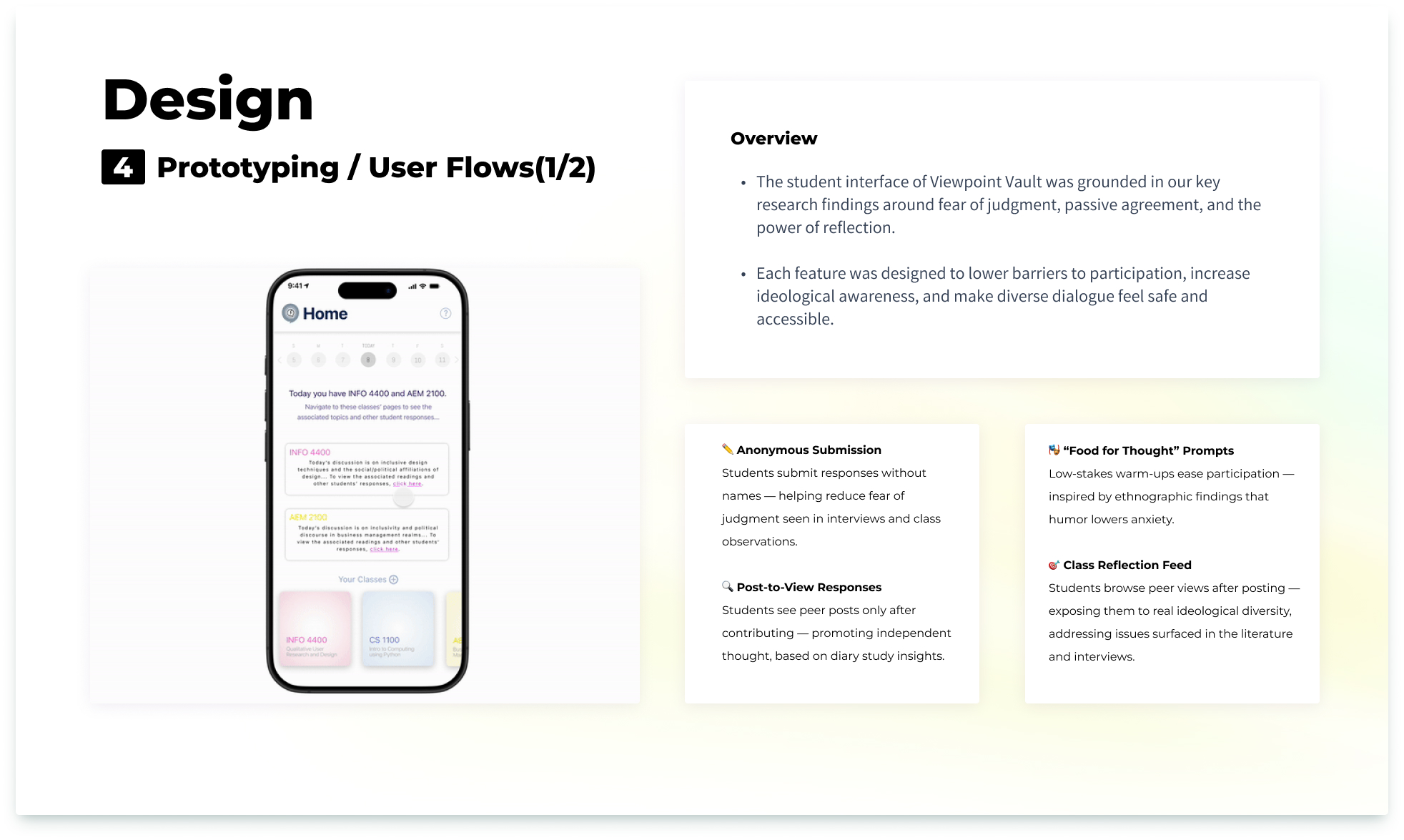
Let students share without names, with playful warm-up prompts that make it easier to open up.
Opportunity
Equip instructors with insight
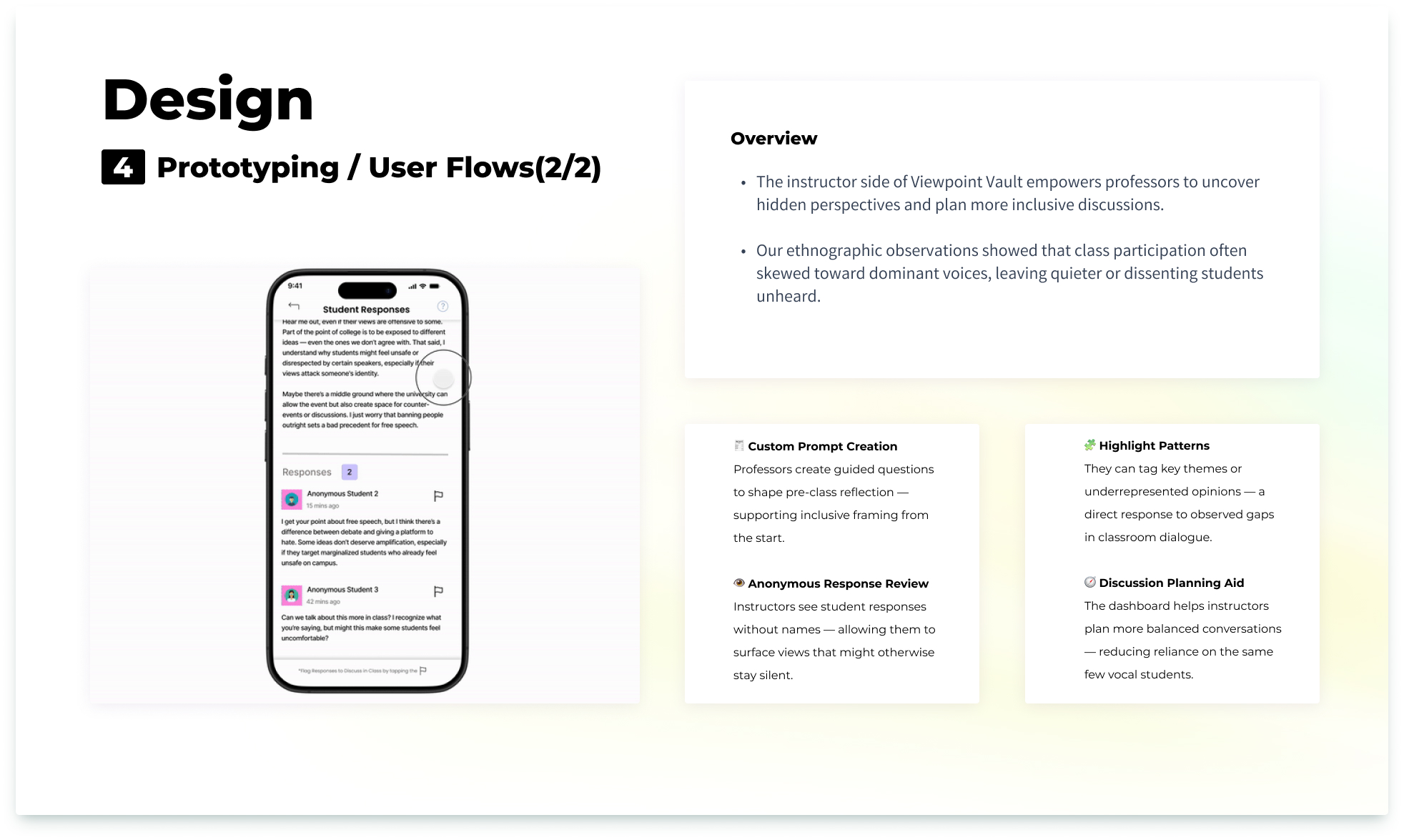
Give instructors a preview of student perspectives so they can draw out quieter voices.
Opportunity
Build in reflection
Low-effort prompts that encourage students to reflect on their own habits without adding friction.
Product decisions
Turning evidence into requirements.
Anonymous submissions
Instead ofNamed posts
Fear of judgment came up in interviews and observations as the main reason people stayed quiet.
Post-to-view: see peers only after you contribute
Instead ofAn open feed
Keeps students from anchoring to the most popular take before forming their own.
Before class, not during
Instead ofA live in-class tool
The social pressure we observed happens in the room; reflection works better before people walk in.
A two-sided product
Instead ofA student-only app
Instructors need to see the range of views to actually make discussions more balanced.
Solution
How a class would use it.
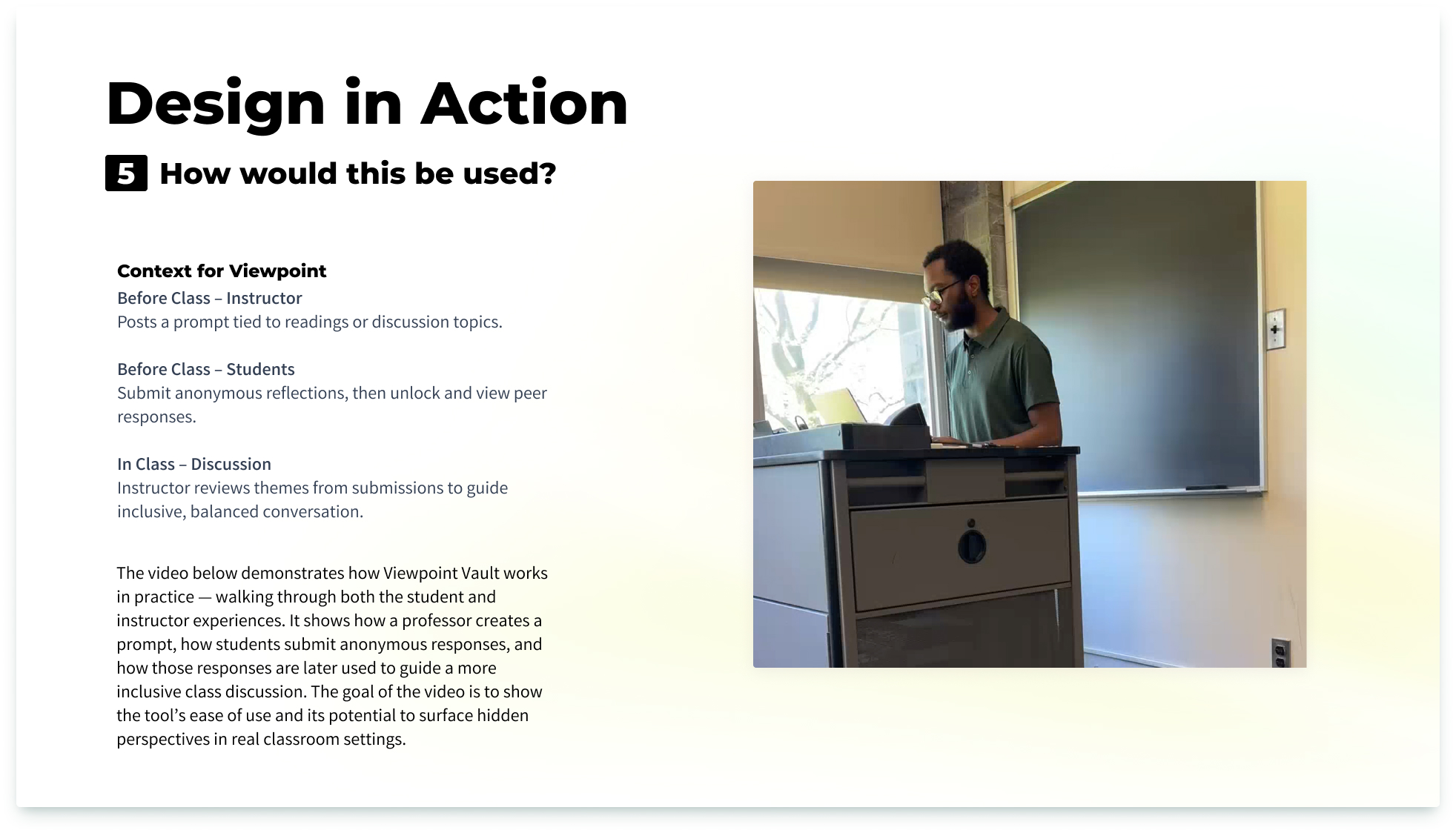
Before class, the instructor posts a prompt tied to the reading. Students submit anonymous reflections, then unlock their peers' responses.
In class, the instructor uses the themes — including underrepresented opinions they've highlighted — to plan a more balanced conversation.
Outcomes
What we have — and haven't — proven.
- What was built
- Research synthesis, product requirements, and prototype flows for students and instructors.
- Evidence
- 10 literature sources, 9 contextual interviews, a five-day diary study (9 participants, 33 entries) and 4 classroom observation sessions.
- Limitations
- No iterative usability testing or semester-long pilot, no direct interviews with professors, and a short snapshot rather than a long-term study.
What I'd measure next
- Share of students in a class who submit a reflection
- Range of viewpoints raised in discussion, before vs. after
- How often instructors use themes to plan discussions
Next project
Spaces
Making distance feel a little smaller.
Open to Product · Product Design · UX Research · Tech roles